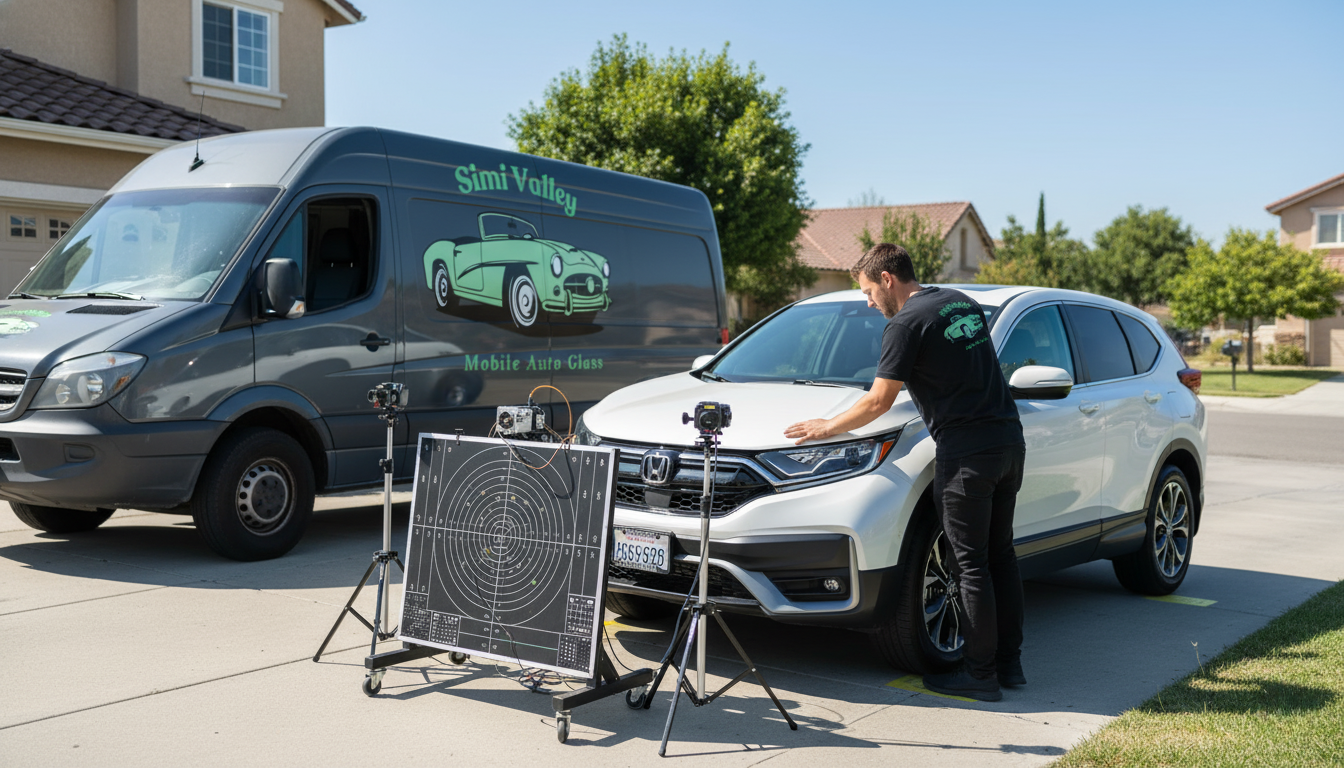
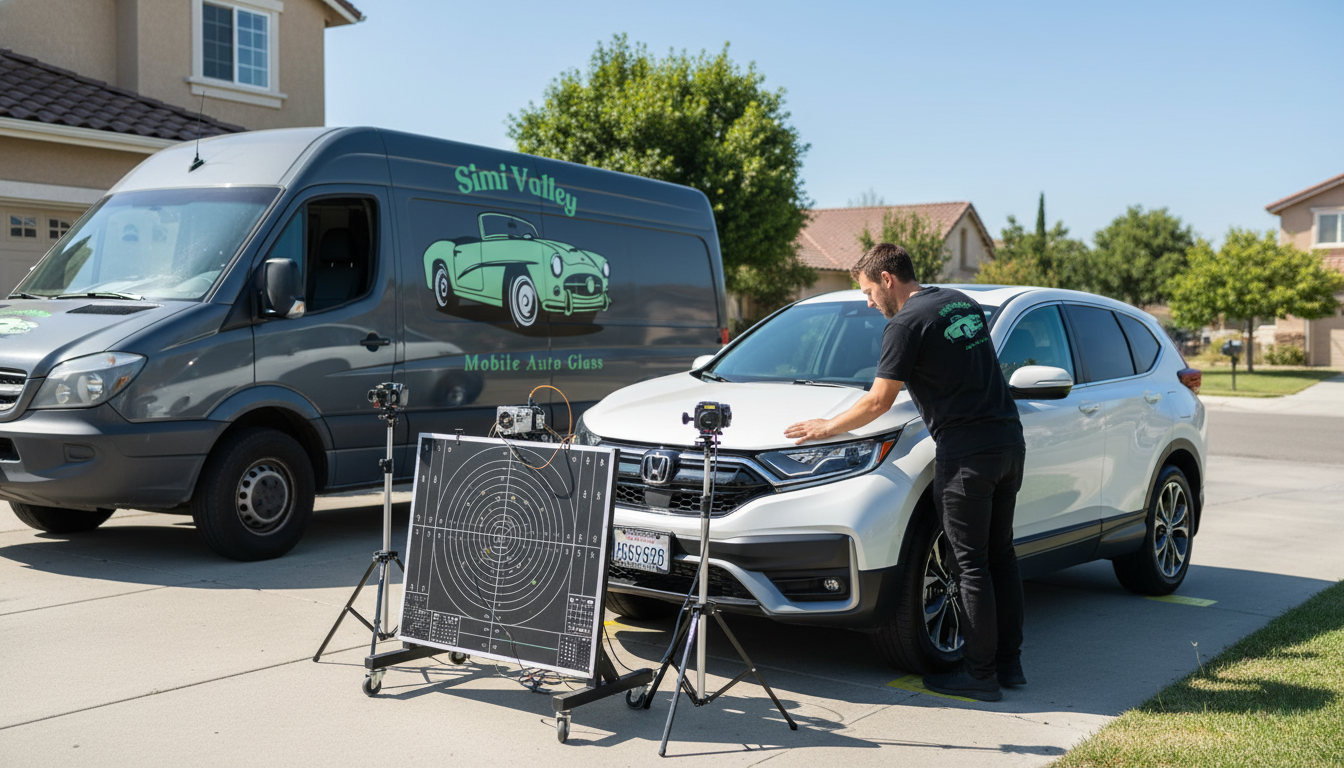
Simi Valley Mobile Auto Glass provides onsite ADAS calibration for vehicles in Simi Valley, California, restoring camera accuracy after windshield replacement using same day mobile service.
Advanced Driver Assistance Systems rely on precise camera alignment to function correctly. These systems use windshield mounted cameras and sensors to monitor lane position, distance to other vehicles, and potential collision risks. When a windshield is replaced, even small changes in camera position can affect system accuracy. ADAS calibration restores correct alignment so safety features operate as designed.
Drivers often feel uncertain after windshield replacement because warning lights may appear or driver assist features may behave differently. Onsite ADAS calibration addresses this concern immediately by recalibrating cameras at the vehicle location. Same day service reduces the risk of driving with misaligned safety systems.
ADAS calibration restores the correct relationship between windshield mounted cameras and the vehicle’s physical orientation. These cameras rely on precise angles and reference points to interpret road markings, vehicle distance, and motion. When calibration is off, the system may misinterpret real world conditions.
Calibration resets camera alignment using manufacturer defined procedures. This process ensures that driver assist systems receive accurate visual data. Proper calibration is essential for maintaining the reliability of lane departure warnings, forward collision alerts, and automatic braking systems.
Windshield replacement changes the mounting surface for ADAS cameras. Even when the replacement glass matches original specifications, minor variations in thickness or seating can alter camera orientation. These small changes are enough to affect system accuracy.
Adhesive curing and glass alignment also influence camera position. Without calibration, the system may rely on incorrect reference data. ADAS calibration corrects these changes by recalibrating the system after installation.
Uncalibrated ADAS systems may provide false alerts or fail to warn drivers of real hazards. Lane departure systems may activate incorrectly or fail to recognize lane markings. Collision warning systems may misjudge distance or closing speed.
These errors reduce driver confidence and compromise safety. ADAS calibration ensures the system responds accurately to real driving conditions. Addressing calibration immediately after windshield replacement reduces risk during daily driving.
ADAS calibration generally falls into two categories: static calibration and dynamic calibration. Each method depends on the vehicle manufacturer's requirements and system design.
Static calibration uses fixed targets and reference points while the vehicle remains stationary. Dynamic calibration requires driving the vehicle under specific conditions so the system can recalibrate using real world input. Technicians determine the correct method based on vehicle specifications.
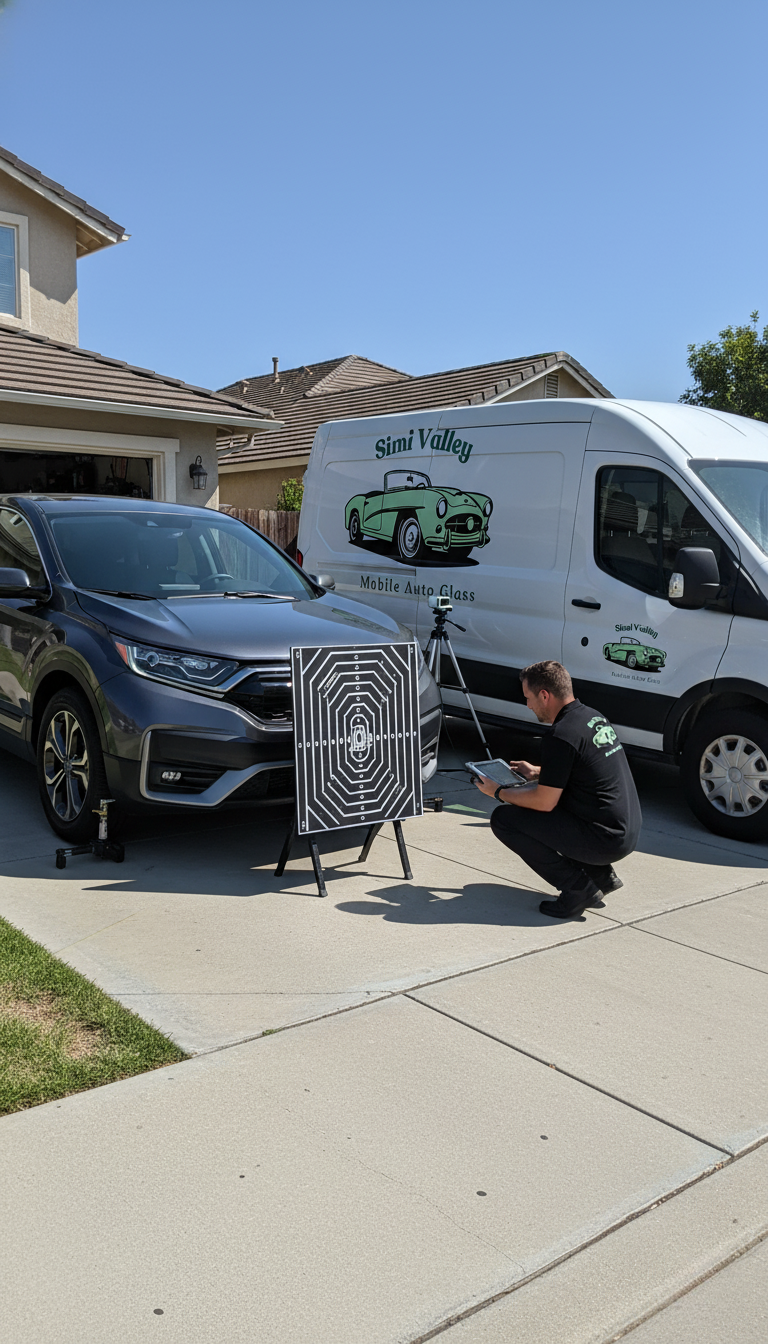
Static calibration is performed with the vehicle parked on a level surface. Calibration targets are positioned at precise distances and angles relative to the vehicle. The system uses these targets to recalibrate camera orientation.
This method requires controlled conditions and accurate measurements. Static calibration ensures consistency and repeatability. It is commonly required for vehicles with forward facing camera systems.
Dynamic calibration involves driving the vehicle at specific speeds on clearly marked roads. The system recalibrates by analyzing lane markings, traffic signs, and vehicle movement. This method relies on real world driving conditions.
Dynamic calibration must follow manufacturer defined procedures. Driving conditions must meet specific criteria for calibration to complete successfully. Technicians verify completion before clearing the vehicle.
ADAS calibration is required after windshield replacement on vehicles equipped with camera based driver assist systems. Calibration may also be required after certain collision repairs or suspension adjustments.
Warning lights or error messages may appear if calibration is missing or incomplete. Even without alerts, calibration is still necessary to ensure accuracy. Onsite assessment confirms whether calibration is required for the vehicle.
A technician identifies the vehicle’s ADAS configuration and calibration requirements. Manufacturer specifications determine whether static or dynamic calibration is needed.
The vehicle is positioned correctly for calibration. Tire pressure, ride height, and alignment conditions are verified to ensure accurate results.
Static targets are set up, or dynamic driving procedures are performed based on requirements. The system recalibrates camera alignment during this step.
Calibration results are verified using diagnostic tools. The system is checked for error codes or warning indicators. The vehicle is cleared after successful calibration.
All steps are completed using mobile equipment when conditions allow.
Windshield repair addresses chips and small cracks before they spread. Repair restores clarity and reinforces the glass surface. Early windshield repair helps drivers avoid full windshield replacement.
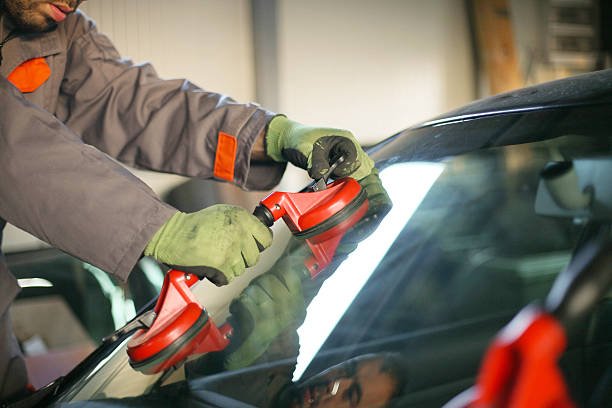
Windshield replacement involves the complete removal of damaged glass and installation of a new windshield. Technicians use industry approved urethane adhesive and follow manufacturer installation specifications. Correct windshield installation supports airbag deployment and crash safety.
Auto glass repair corrects minor cracks and surface damage on car windshields. Repair prevents crack expansion and improves visibility. Resin injection strengthens the damaged glass area and restores structural stability. This option is effective when damage remains limited.
Auto glass replacement is required when damage compromises safety or visibility. Technicians remove damaged glass and install OEM grade laminated or tempered glass designed for the vehicle. Proper replacement supports vehicle rigidity and reduces wind noise.
Car window repair and replacement restore side and rear windows damaged by break-ins or accidents. Technicians remove broken glass from the interior before installing new window glass. This service restores security and protects the vehicle from weather exposure.
ADAS systems rely on vehicle geometry to interpret visual data accurately. Suspension or alignment issues can affect calibration results. Calibration assumes the vehicle is mechanically sound.
Technicians verify basic conditions before calibration begins. This step ensures calibration accuracy and system reliability. Addressing alignment concerns improves long term system performance.
Same day mobile calibration allows drivers to restore safety systems without delay. Onsite service reduces the need for additional appointments after windshield replacement. Mobile calibration fits into daily schedules and minimizes downtime.
Drivers can request free online estimates before scheduling calibration. This helps reduce uncertainty when dealing with advanced vehicle systems.
ADAS calibration typically takes longer than glass installation because of setup and verification steps. Static calibration may take one to two hours, depending on vehicle complexity. Dynamic calibration time depends on driving conditions.
Completing calibration promptly reduces the risk of driving with misaligned systems. Same day service helps drivers maintain confidence in vehicle safety features.
ADAS calibration services are backed by a workmanship warranty covering calibration accuracy. If calibration issues arise due to execution errors, the system is re-evaluated. Warranty terms are explained clearly before service completion.
This warranty reflects the importance of correct calibration for safety system reliability.
ADAS calibration corrects the alignment of windshield mounted cameras and sensors relative to the vehicle. These systems rely on precise angles to interpret lane markings and distance accurately. Calibration resets reference points after windshield replacement. This ensures safety systems respond correctly to real world conditions. Without calibration, system accuracy cannot be guaranteed.
Yes, most vehicles with camera based driver assist systems require calibration after windshield replacement. Even small changes in camera position affect system accuracy. Manufacturer guidelines specify calibration requirements. Skipping calibration increases the risk of incorrect system behavior. Onsite assessment confirms the requirement.
Driving without calibration may result in inaccurate warnings or system failure. Some systems may deactivate, while others may function incorrectly. This creates a safety risk during daily driving. Calibration restores correct system behavior. Same day service reduces time spent driving with misaligned systems.
Calibration time depends on the vehicle and method required. Static calibration may take one to two hours, while dynamic calibration depends on driving conditions. Setup and verification add time to the process. Technicians provide timing expectations before starting work. Vehicles are cleared only after successful completion.
In most cases, warning lights related to calibration will clear after successful completion. Diagnostic tools confirm system status. If other issues are present, technicians explain the next steps. Calibration addresses camera alignment, not unrelated system faults. Verification ensures accuracy before release.
Yes, onsite ADAS calibration can be performed when space and conditions allow. Static calibration requires sufficient space and a level surface. Dynamic calibration requires appropriate driving conditions. Scheduling confirms whether mobile calibration is suitable. Same day service reduces inconvenience.
Yes. Lighting conditions, rain, and road visibility can affect dynamic calibration. Static calibration requires controlled positioning and clear target visibility. Technicians evaluate conditions before starting calibration. Proper conditions ensure accurate results. Scheduling allows planning around environmental factors.
Calibration remains valid unless the windshield is replaced again or vehicle geometry changes. Suspension or alignment modifications may require recalibration. Normal driving does not affect calibration. Technicians explain when recalibration may be needed. Proper installation supports long term accuracy.
Drivers needing onsite ADAS calibration in Simi Valley can request a free online estimate or schedule same day mobile service to restore driver assist system accuracy after windshield replacement.
Onsite Mobile Auto Glass Repair & Replacement
Live weather updates for onsite auto glass service planning